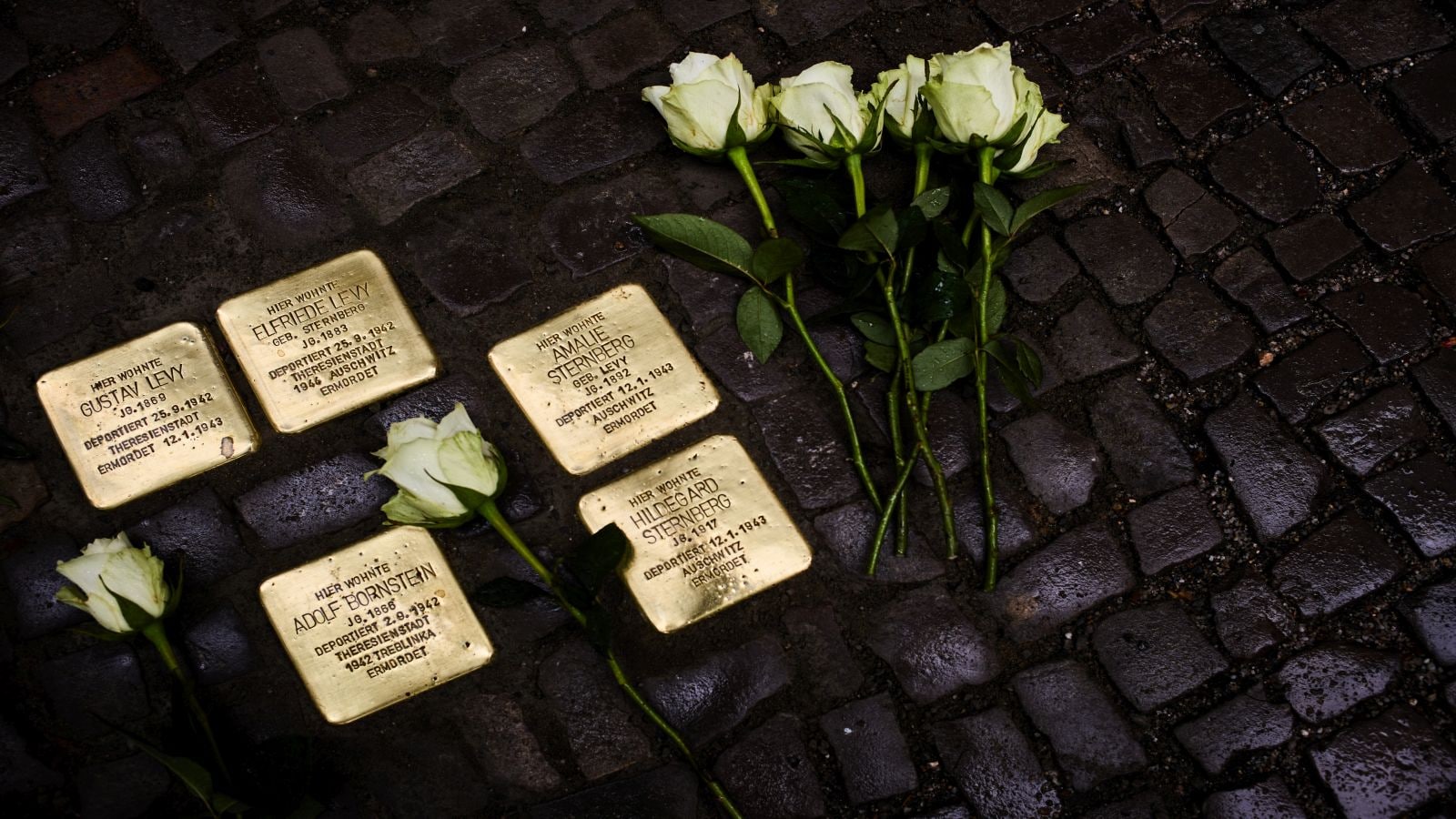
You walk down a sidewalk, your eyes fixed on your phone, and your foot glances over a small, unassuming square of brass. Most people walk right past them. But those tiny cobblestone-sized monuments—known as Stolpersteine, or stumbling stones—have turned into the center of a brutal political fight in Germany.
The town council in Heidenau, Saxony, just voted to ban any new installation of these Holocaust memorial plaques on public streets and pavements.
If you are wondering why a town would outlaw memorials honoring victims of the Nazi regime, the reality involves a toxic mix of local politics, shifting public memory, and a controversial alliance between mainstream conservatives and the far-right. Here is what is actually happening behind the headlines.
What Are Stolpersteine and Why Do They Matter
Conceived by German artist Gunter Demnig back in the 1990s, the Stolpersteine project is the world's largest decentralized memorial. Over 120,000 of these brass-capped concrete cubes sit flush with the pavement outside the last homes or workplaces of people murdered or persecuted by the Nazis.
They force everyday life to intersect with historical horror. You don't visit a quiet, sequestered museum to see them. You trip over them on your commute to the grocery store.
That intimacy is precisely why they have become so powerful. They bring individual victims back into the neighborhoods they were violently ripped from. But in Heidenau, a town near Dresden with a history of sharp political divides, that daily reminder has officially been brought to a halt.
The Vote Behind the Ban
During a secret ballot, the Heidenau city council passed a resolution rejecting all future applications for new stumbling stones in public spaces. The motion didn't come out of nowhere. It was jointly pushed by the far-right Alternative for Germany (AfD) party and the center-right Christian Democratic Union (CDU), along with a local group called the Oberelbe Alliance.
Thirteen council members voted in favor of the ban, six opposed it, and one abstained.
The local city administration actually recommended rejecting the proposal, arguing that public remembrance needs to stay visible and integrated into daily street life. The council ignored them. Under the new resolution, any future commemorations for Nazi victims must be tucked away in a designated site at the town's Northern Cemetery instead.
The Arguments Driving the Decision
If you listen to the supporters of the ban, they frame their objections around dignity. The core argument is that pedestrians step on the names of murdered people, sometimes consciously, sometimes not. They claim that embedding these names in dirty pavements where people walk and dogs foul the street disrespects the victims.
Moving the memory to a cemetery, proponents argue, creates a protected environment where citizens can reflect without disruption.
Critics, however, aren't buying it. International groups like the Auschwitz Committee and the March of the Living have condemned the decision instantly. They point out a grim historical parallel: the Nazis spent years trying to erase these people from existence, and pushing their names out of public view into a peripheral graveyard feels an awful lot like finishing the job.
When you remove history from the streets, you make it optional. You can choose not to visit the cemetery. You can't easily avoid a stone on your doorstep.
Breaking the Firewall in German Politics
The timing of this vote adds fuel to an already blazing political fire across Germany. The motion exposes fractures in what Germans call the Brandmauer—the informal political firewall where mainstream democratic parties vow never to cooperate with the far-right AfD.
When the center-right CDU teams up with the AfD to pass policies, alarms ring nationwide. With the AfD surging in national polls, local decisions like the one in Heidenau look less like isolated municipal debates and more like a testing ground for shifting political norms.
Munich implemented a ban on public-property stumbling stones years ago, largely due to concerns raised by local Jewish community leaders who also worried about desecration. But the political dynamics in Saxony carry a different weight, raising urgent questions about how far-right influence is slowly reshaping mainstream historical accountability.
What Happens Next
Local activists in Heidenau had already requested new stones to honor local residents like Martha and Fritz Goldstein, even offering to pay for the manufacturing and installation out of pocket. Those requests will now be rejected under the new rules.
If you care about how societies grapple with their darkest chapters, pay attention to these local council votes. Historical memory doesn't usually disappear overnight through sweeping national decrees. It gets chipped away piece by piece, vote by vote, in small town halls where few people are watching.