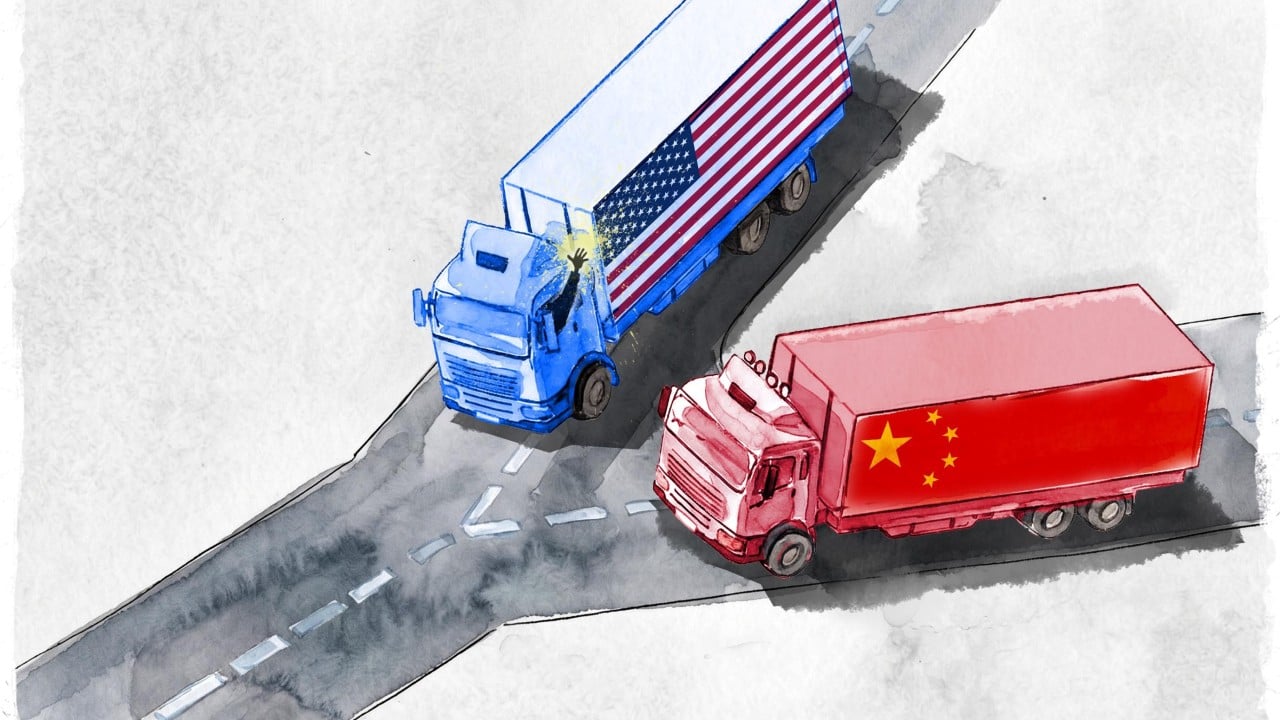
For an entire decade, foreign policy circles have been obsessed with a single, gloomy theory. The idea is simple: when a rising power threatens to displace an existing ruling power, war is almost guaranteed. It's called the Thucydides Trap, and it has hung over Washington and Beijing like a dark cloud. But honestly? It is a terrible fit for reality.
If you look past the doom-laden headlines and constant chatter about inevitable escalation, you will see a completely different dynamic playing out. Washington and Beijing aren't barreling toward an apocalyptic collision. Instead, they are figuring out how to share the global stage through a complex dance of high-stakes competition and calculated pragmatism.
The Flaw in the Trap
The core problem with the Thucydides Trap is that it treats history as an immutable script. It looks at ancient Athens and Sparta, glances at past rivalries, and assumes modern superpowers are locked on a predetermined collision course.
That view ignores how deeply interconnected the modern world actually is. Back when historical rivalries erupted into total war, nations could afford to isolate themselves or wipe out competitors without destroying their own economic lifelines. Today, total war between the United States and China is mutual suicide. Both economies are stitched together by trillions of dollars in trade, shared supply chains, and financial dependencies that make direct military conflict an option of absolute last resort.
Look at the commercial data. Despite years of decoupling rhetoric and aggressive tariffs, bilateral trade numbers continue to show stubborn resilience. Corporate boardrooms in both countries view total economic severance as financial disaster. When push comes to shove, economic self-interest acts as a powerful brake on military adventurism.
Managing the Rivalry Without a War
Does this mean everything is peaceful? Absolutely not. US-China relations have settled into a tense, managed rivalry rather than a warm partnership. It's a rules-based pause where both capitals test each other's boundaries daily.
Beijing has steadily built up alternative economic infrastructure—such as the Cross-Border Interbank Payment System (CIPS)—to insulate itself against Washington's powerful sanctions machine. Meanwhile, the United States continues to exert pressure through export controls and security alliances in the Indo-Pacific.
Yet, this friction is contained. Both superpowers have established crucial diplomatic guardrails. Recent high-level financial and security dialogues show that leaders on both sides recognize the urgent need to keep communication channels wide open. They are trading tactical blows, but they are doing so within boundaries that prevent minor disputes from spiraling into kinetic warfare.
Moving Past the Doom Narrative
If you want to understand where global politics is heading, stop listening to analysts who profit from panic. The narrative that a shooting war is inevitable sells clicks, but it misreads the strategic calculus of both governments.
China isn't looking to launch a reckless military crusade, and the US isn't looking to trigger a global economic collapse. Both nations have too much to lose. The real challenge of this century isn't avoiding an inevitable war; it is learning how two radically different political and economic systems can coexist on the same planet.
Keep an eye on supply chain diversification and digital currency frameworks rather than military countdowns. That's where the real competition is happening. Stop worrying about an imaginary trap and start watching how pragmatic diplomacy quietly rewrites the rules of the road every single day.