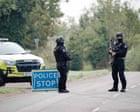
Five vans roll into a quiet Gloucestershire lane in the dead of night. They park near a high-security military installation housing American bombers. A local farmer calls 999. Within hours, the nation’s counter-terrorism machinery swings into high gear, politicians trade rapid-fire talking points, and an entire security apparatus scrambles to assess whether a foreign power has just launched a brazen attack on British soil.
Then reality sets in. The suspects are UK nationals from London. No explosives are found. They are released on police bail without immediate charge.
The frantic weekend incident near RAF Fairford laid bare a nervous reality in British counter-terrorism. When state-sponsored threats from Tehran dominate intelligence briefings, every midnight convoy looks like an international conspiracy. But beneath the breathless headlines about foreign actors and high-level base security, the incident raises uncomfortable questions about how intelligence is gathered, how political opportunists hijack breaking news, and why British security forces are caught reacting to late-night 999 calls instead of proactive intelligence.
The Gap Between Intelligence and Ground Reality
Intelligence agencies like MI5 operate in a complex ecosystem. Officials have tracked numerous hostile state plots on UK soil over recent years, spanning proxy groups, cyber espionage, and direct kinetic targeting of dissidents or journalists. When the Islamic Revolutionary Guard Corps publicly designates bases like RAF Fairford as legitimate targets because US bombers use them for strikes in the Middle East, security posture naturally shifts to maximum alert.
Yet the Fairford arrests were not intelligence-led. British officials quietly admitted that security services had no prior inkling that these five men and their three vans would park outside the perimeter fence at 12:45 AM.
Think about that for a moment.
A critical military asset, housing powerful strategic aircraft and operating at elevated threat levels, was caught completely flat-footed by five individuals whose presence was flagged not by sophisticated electronic surveillance or asset monitoring, but by a vigilant local farmer calling emergency services.
That disconnect exposes a vulnerability. While counter-terrorism analysts spend months mapping out sophisticated state-backed proxy cells, conventional security around vital military infrastructure can still rely heavily on ordinary citizens spotting something unusual down a country lane.
Political Noise Versus Hard Facts
Whenever a security scare hits the wires, political opportunism follows immediately. Within hours of the Fairford arrests, high-profile figures jumped online to frame the incident through their preferred political lenses.
Critics of immigration policies tried to link the episode to border security and small boat arrivals. They argued that foreign actors are moving freely inside the country, completely ignoring the mundane detail that the suspects were British citizens born and raised in London. This rush to score political points before facts are verified damages public trust. It turns a serious national security investigation into a partisan football.
On the international stage, narrative inflation runs just as wild. When high-ranking foreign officials chime in with sweeping claims that intelligence agencies had been monitoring suspects for a long time and averted massive destruction, it creates a fog of war. Local police forces and domestic security services are left trying to manage public panic while reconciling overblown external commentary with the sparse physical evidence in front of them.
In Fairford's case, the evidence turned up empty. No explosive materials. No operational devices. Just five men, three vans, and a lot of unanswered questions about what they were actually doing there.
Assessing the Real Threat from Tehran
It would be a mistake to dismiss Iranian state threats as mere posturing. The UK has faced real, dangerous incidents over the last few years.
Consider the 2022 stabbing of journalist Pouria Zeraati in Wimbledon, executed by operatives directed by foreign handlers. Consider the state-backed networks linked to arson attacks on Jewish community assets and media organizations across London. MI5 leadership has repeatedly warned about dozens of potentially lethal plots tracked on British soil.
Tehran's strategy often relies on proxies, criminal underworld freelancers, and low-level operatives to maintain plausible deniability. Using local proxies or hired contractors creates a buffer between the regime and the kinetic action.
However, driving vans up to the front door of RAF Fairford does not fit the typical profile of a sophisticated, state-directed sabotage mission. Professional operatives do not announce their presence by blundering into rural driveways at midnight without an escape plan or a clear operational objective.
If Iran wanted to strike a high-value Western military installation, it would employ tradecraft designed to evade notice, not amateurish antics that trigger immediate emergency calls from local agriculture workers. The lack of viable explosives or sophisticated planning suggests that if there was any malicious intent at all, it was closer to reckless bravado or foolish reconnaissance than an imminent terror strike.
What Needs to Change in UK Security
The Fairford episode serves as a wake-up call for defense planners and counter-terrorism coordinators. Relying on heightened threat levels and reactive policing is not enough when tensions with foreign adversaries remain at a boil.
Security around joint-use or foreign military installations on British soil needs an overhaul. Perimeter defenses cannot depend on lucky 999 calls from residents when global friction increases the likelihood of hostile interest.
Furthermore, media and political commentary must exercise restraint. Jumping to conclusions about foreign sabotage or border failures before investigators examine the vehicles creates unnecessary panic and distracts from actual security gaps.
The investigation continues, but the lesson is already clear. True national resilience comes from quiet competence, rigorous intelligence, and verified facts—not from midnight scares and rushed political spin.