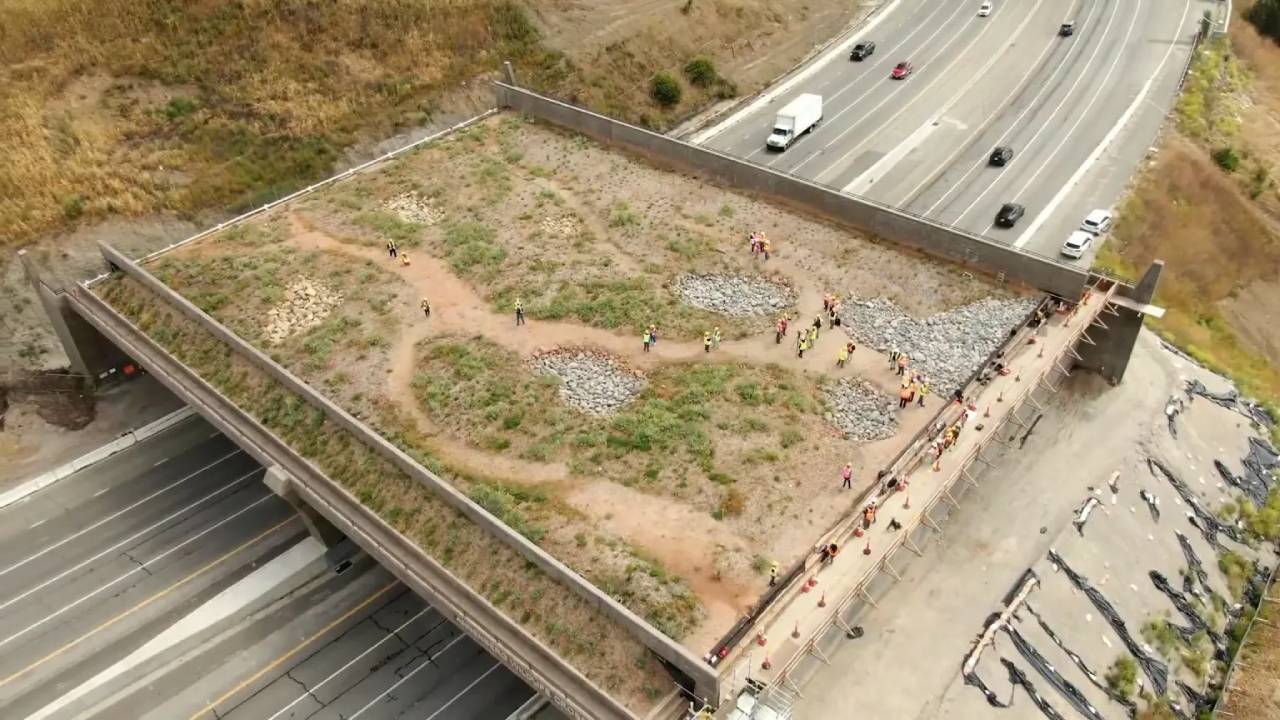
Animals don't check for oncoming traffic before crossing a highway. They just try to get to water, food, or a mate, and too often, asphalt becomes a death trap. That's why officials are finally moving forward with two wildlife crossings across State Route 62 in California's Mojave Desert. Backed by over $6 million in funding, these planned structures aim to stitch back together a landscape torn apart by asphalt, saving bighorn sheep, mountain lions, and bobcats from being hit by cars.
If you’ve ever driven through the desert stretches near Joshua Tree National Park, you know how fast cars fly down these roads. You also see the devastating cost of high-speed traffic slicing right through pristine wilderness.
The Problem With State Route 62
State Route 62 acts as a severe barrier in the southern California desert ecosystem. It runs directly between Joshua Tree National Park to the east and the Sand to Snow National Monument to the west. Before cars and pavement took over, animals roamed freely across this entire region. Now, the highway cuts their territory in half, trapping populations and isolating them from vital resources.
Habitat fragmentation causes real genetic damage over time. When animals can't safely mix with neighboring populations, inbreeding rises and overall resilience drops. Conservationists have watched this slow-motion crisis unfold for decades.
The emergency hit home in late April when an 18-month-old male cougar was struck and killed on the highway's Yucca Grade section. That tragic loss put a sharp spotlight on the urgent need for safe passage options.
Where the Money Came From
Projects like this don't happen on good intentions alone; they take serious cash. The Mojave Desert Land Trust and local partners managed to pull together a financial package topping $6 million to get the ball rolling.
In February, the California Wildlife Conservation Board handed over a $5.5 million grant. Shortly after the cougar collision on the Yucca Grade, the Coachella Valley Mountains Conservancy kicked in an additional $512,000.
This money isn't buying concrete or steel just yet. Instead, it funds the heavy lifting of the planning phase: engineering surveys, environmental reviews, and technical studies that take years to complete. Kelly Herbinson, executive director of the Mojave Desert Land Trust, notes that simply designing the structures and clearing regulatory hurdles will take roughly three years.
What Researchers Are Doing Right Now
Before construction crews ever break ground, scientists need to know exactly how animals move across the highway. Researchers are currently deep into a long-term study scheduled to run through April 2027, with subsequent phases stretching toward the end of the decade.
Field teams track species like bighorn sheep, mountain lions, and bobcats. A big part of the work involves gathering animal scat for DNA analysis to track genetic health and movement patterns. Detection dogs even help sniff out samples across rough terrain.
These baseline surveys matter immensely. Without them, nobody can prove whether the crossings actually work once they're built. By collecting genetic data now, scientists can measure if animals successfully use the structures later on to mix with other populations.
The Long Road Ahead
Building wildlife bridges and underpasses isn't a quick weekend fix. The current funding takes the two proposed State Route 62 structures to about 65% design completion. After that milestone, organizers must secure a separate round of funding specifically for construction.
Critics sometimes question spending millions on animal bridges when traditional road budgets are tight. But the math tells a clear story. Wildlife-vehicle collisions cost human lives, cause severe injuries, and rack up massive property damage bills. Keeping large animals like mountain lions and bighorn sheep off the pavement protects drivers just as much as it saves wildlife.
Desert communities thrive when human infrastructure and wild landscapes figure out how to coexist. If these two crossings become a reality, they'll give native species a fighting chance to roam their historic home without dodging bumper traffic.
Check local conservation updates if you want to support regional habitat connectivity projects or get involved with desert land trusts working on these initiatives.


