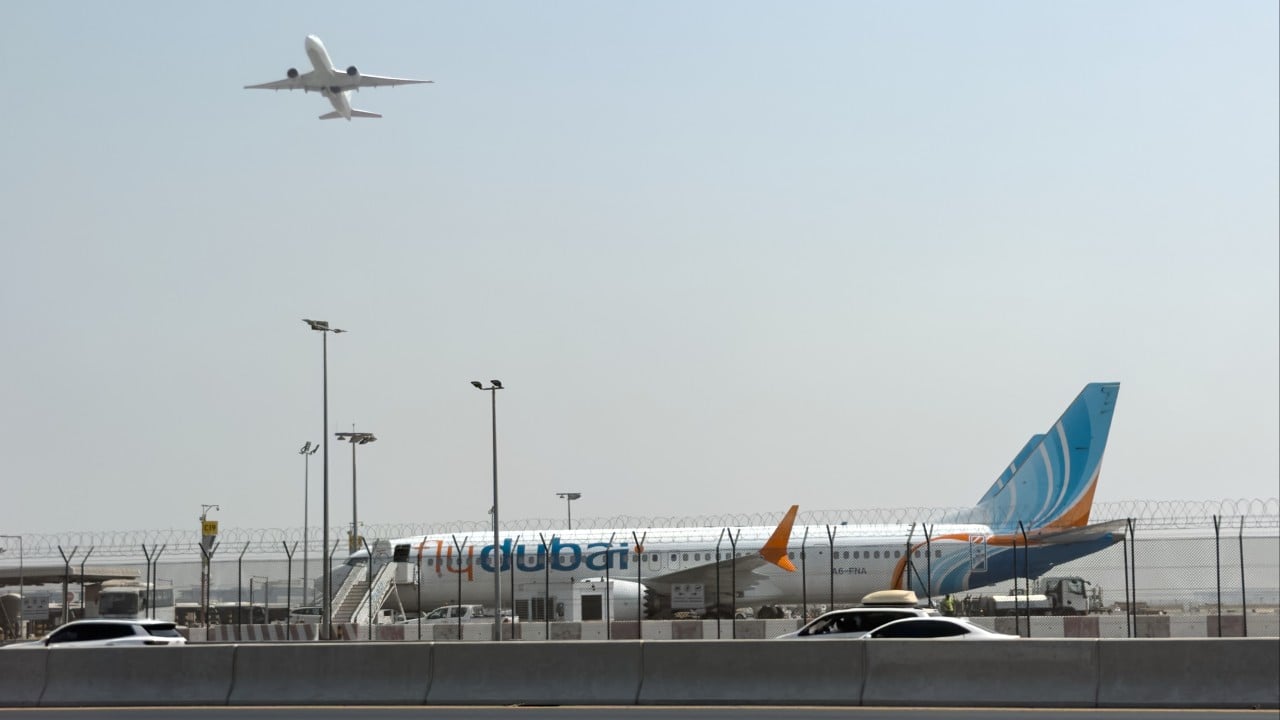
For decades, the Persian Gulf felt like an untouchable laboratory for aviation miracles. Dubai, Doha, and Abu Dhabi turned empty desert sands into gleaming global transit hubs, connecting passengers seamlessly between Europe, Asia, and Australia. They bet everything on geographical luck and cheap fuel, building super-connectors that swallowed up traditional legacy carriers.
Now, regional conflict has thrust those very glass-and-steel superhubs straight into the line of fire. When airspace across Iran, Iraq, Israel, and parts of the Gulf closes down under emergency security protocols, it doesn't just delay flights. It severs the connective tissue of international travel.
Can the Gulf aviation superhub model survive the war, or are we watching the permanent twilight of the mega-connector era? Let's look at why this crisis hits differently than anything the industry has faced before.
The Fragility of the Geography Bet
The entire Gulf superhub strategy relies on a simple premise: sit in the middle of the map, and the world has to fly through you. For years, it worked brilliantly. Emirates, Qatar Airways, and Etihad built massive widebody fleets designed to funnel traffic through single mega-airports.
But sitting in the middle of the map also means sitting right next door to volatile geopolitics. When military strikes and retaliatory actions trigger sudden airspace closures, hubs like Dubai International (DXB) and Hamad International (DOH) face immediate operational paralysis. Thousands of cancellations pile up in days. Global air cargo capacity takes an instant 16 to 18 percent hit when key corridors shut down.
Unlike previous disruptions, such as volcanic ash clouds or pandemic lockdowns, this isn't about biological safety or natural weather events. It's about kinetic warfare. When passengers realize that transiting through the Middle East means playing roulette with sudden airspace shutdowns, consumer confidence takes a massive beating.
Beyond Fuel Costs and Rerouting
Airlines are adaptable creatures. When direct corridors close, they reroute planes through Egypt, Turkey, or the Caspian region. But detours burn extra jet fuel, add hours to long-haul flights, and squeeze already tight aircraft utilization rates.
The deeper threat isn't just longer routing. It's the structural shift in airline economics. When carriers lose access to critical transfer markets—like India or secondary European gateways—their hub-and-spoke math breaks down. If connecting traffic drops because passengers choose point-to-point direct flights to avoid regional risks, the massive capacity pumped into these hubs becomes an expensive liability.
We saw hints of this shift during recent airspace closures, where regional carriers had to ground major parts of their fleets while competitors with more diversified, point-to-point networks absorbed the displaced demand.
How Gulf Carriers Are Adapting
Survival in 2026 requires more than waiting for a ceasefire. Superhub operators are quietly rewriting their playbooks to hedge against systemic risk.
- Diversifying aircraft orders toward smaller, ultra-long-range narrowbodies that bypass mega-hubs entirely.
- Investing in localized maintenance and supply chain redundancy to shield against localized shocks.
- Rethinking scheduling buffers to handle sudden airspace avoidance corridors without causing total network meltdowns.
The Gulf aviation model won't vanish overnight. Billions of dollars in infrastructure and decades of state backing provide a thick financial cushion. But the era of carefree expansion is over. The next chapter demands a hard look at vulnerability, proving that even the most gleaming desert mirage must weather the storms of real-world conflict.