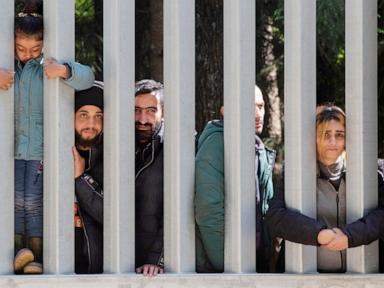
Traditional border policies are breaking down under political pressure. Poland has stopped accepting asylum claims along its frontier with Belarus, implementing a strict legal block designed to push back against what Warsaw calls state-orchestrated hybrid warfare. Prime Minister Donald Tusk’s administration argues that existing international frameworks were never built to handle hostile governments weaponizing human migration. Now, Warsaw wants the rest of the European Union to adopt the exact same playbook.
If you’ve been following European security over the last few years, you know the eastern border has turned into a flashpoint. Since 2021, thousands of migrants from the Middle East, Asia, and Africa have been funneled toward Poland and the Baltic states via Minsk and Moscow. The goal isn't just movement; it's destabilization. Confronted with record applications and mounting physical attacks on border guards, Poland didn't wait for Brussels to draft a slow consensus. They passed a law allowing border authorities to suspend international protection requests entirely in designated zones, subject to frequent parliamentary extensions.
The Real Mechanics Behind the Border Crackdown
What does this suspension look like in practice? Border guards possess the authority to reject protection claims instantly if individuals cross irregularly from Belarus, unless those travelers fall under strict vulnerability exceptions like pregnant women, unaccompanied minors, or people facing immediate medical emergencies.
Critics and human rights organizations have slammed the legislation. The United Nations High Commissioner for Refugees and groups like Amnesty International argue that a blanket suspension violates the core principles of the 1951 Refugee Convention and basic human rights law. They point out that bypassing individual assessments leaves vulnerable individuals stranded without recourse, running straight into the hazard of unlawful pushbacks.
Yet the Polish government refuses to back down. Officials frame the choice as a matter of national survival rather than a standard immigration dispute. When hostile states use organized travel routes to overwhelm border infrastructure, standard bureaucratic procedures collapse. Warsaw points to hundreds of rejected applications and a sharp statistical drop in attempted illegal crossings as proof that the deterrence strategy works.
Why Europe is Slowly Shifting Its Stance
For years, Brussels preached a unified humanitarian approach that frowned upon hard borders. But reality is forcing a reckoning. Other front-line nations, like Finland facing similar pressures on its Russian border, have taken aggressive containment measures of their own.
The political calculus across the continent has changed dramatically. Poland's tough posture enjoys broad domestic backing, crossing traditional political divides. As migration continues to fuel political polarization across Western democracies, other EU capitals are quietly taking notes. What started as an extreme measure by a single front-line state is rapidly transforming into a template for broader European border enforcement.
If you want to understand where European migration policy is heading, look east. The old rules are out, and national security is taking precedence.
Heated debate over migrants rights in Poland
This video provides additional context on the intense debates surrounding migration rights and policy shifts at the Polish border.


