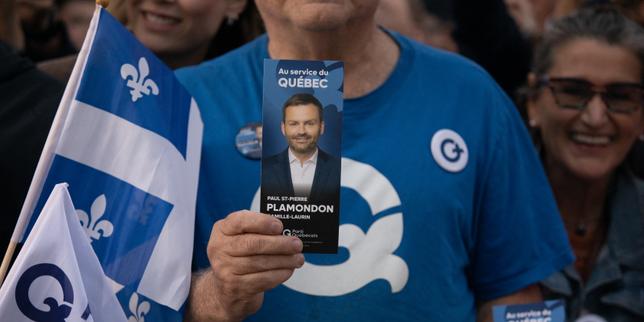
Politics usually rewards caution. You play the middle, you avoid offending donors, and you say as little of consequence as possible. Paul St-Pierre Plamondon didn't get the memo. As the leader of the Parti Québécois, he's upended the provincial political landscape by doing something almost unheard of today. He means what he says.
For years, the sovereignty movement in Quebec was written off as a ghost of the past. Analysts declared it dead, buried under decades of economic integration and federal fatigue. Yet here we are. St-Pierre Plamondon has positioned himself not just as a viable alternative, but as a genuine front-runner for the premier's office. You cannot understand what is happening in Quebec right now without looking past the usual talking points. This isn't just about separation anymore. It's about identity, cultural preservation, and a profound exhaustion with the status quo in Ottawa and Quebec City.
The Rise of an Unapologetic Nationalist
When St-Pierre Plamondon took the helm of the Parti Québécois in 2020, the party was practically on life support. It had lost its traditional strongholds and was struggling for relevance in the National Assembly. Most politicians would have pivoted to the center, softening their rhetoric to win over hesitant voters. He went the exact opposite direction.
He leaned straight into identity politics and economic nationalism. He argued that Quebec's cultural survival requires full statehood, and he framed it not as an angry grievance, but as a logical necessity. That directness struck a nerve. Younger generations, who didn't live through the 1995 referendum, are responding to a leader who refuses to apologize for wanting a distinct nation.
Why the Establishment Didn't See Him Coming
Traditional political strategists love to measure success by focus groups and polling averages. They thought nationalism was a fading sentiment among urban professionals. They missed the underlying anxieties around immigration, language erosion, and housing affordability.
St-Pierre Plamondon tied these everyday anxieties directly to the constitutional question. When housing gets scarce and public services strain under population growth, he points to Ottawa's immigration targets as the root cause. Whether you agree with his diagnosis or not, it offers a clear narrative. In a world full of vague political promises, clarity cuts through the noise.
What Happens Next
The road to the next election is long, and momentum is a volatile thing in Canadian politics. Incumbent parties rarely give up power easily, and the counter-attacks from federalists are already ramping up. They will paint any push for independence as economic suicide.
Still, the dynamic has shifted. The question is no longer whether sovereignty is a dead issue. The real question is how long the current constitutional arrangement can hold while a charismatic leader convinces a new generation that they can build something better on their own.
Stop waiting for conventional politicians to fix structural problems. Watch what happens when an entire province decides it's ready to redraw the map.