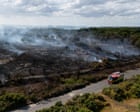
England is burning. You've probably seen the footage by now. Smoke billowing across once-lush heathlands, homes reduced to ash in the West Midlands, and fire crews stretched to a breaking point that feels unsustainable. Yet, behind the headline-grabbing emergencies lies an uncomfortable truth. The British government quietly shelved a critical plan designed to prepare the English countryside for these exact blazes.
When freedom of information requests pulled back the curtain, they exposed a gaping hole in national emergency planning. Ministers promised a comprehensive wildfire risk programme spanning from 2023 to 2027 under the third national climate adaptation strategy. It never happened. The paperwork collected dust while the weather grew hotter, drier, and more punishing.
People are asking how a modern nation misses a threat staring them right in the face. The answer comes down to administrative inertia and reactive policymaking. Governments love announcing grand adaptation strategies when the public is watching. They rarely enjoy funding them when the news cycle moves on.
The Gear Shortage That Puts Firefighters at Risk
It gets worse. The equipment crisis facing frontline crews is nothing short of alarming. Data from the Country Land and Business Association shows that over half of the responding fire services lack proper wildfire personal protective equipment.
Think about what that means in practice. Firefighters are heading into intense, toxic environments wearing heavy, standard-issue gear built for structural urban fires. It traps heat. It causes severe overheating. Worse still, standard particle-filtering respirators fail to block lethal gases like carbon monoxide present in dense smoke. When crews strip off their gear just to breathe or cool down, they open themselves up to extreme hazards.
Training programs are lagging just as badly. Some regional services report that fewer than ten percent of their personnel possess tactical training for wildland fires. You can't fight a sprawling landscape fire with urban tactics.
What Actually Needs to Happen Now
Reacting after a disaster hits won't cut it. Disposable barbecue bans and emergency Cobra meetings arrive far too late for families who already lost everything in places like Stourbridge.
If England wants real resilience against future extreme weather, structural changes must happen on the ground.
- Re-wet peat bogs: Dry peat acts like subterranean coal. Keeping bogs saturated stops underground fires before they erupt.
- Restore agricultural water sources: Bringing back ponds and holding water in farmers' fields gives local crews immediate water access away from mains.
- Overhaul protective gear: Fire services need lightweight, specialized PPE and modern respirators built specifically for wildland conditions.
- Mandate specialized training: Every regional brigade needs tactical command units trained explicitly in landscape fire behavior.
Politicians can't afford to ignore the countryside anymore. The tinderbox is already lit. It's time to equip the people tasked with putting it out.