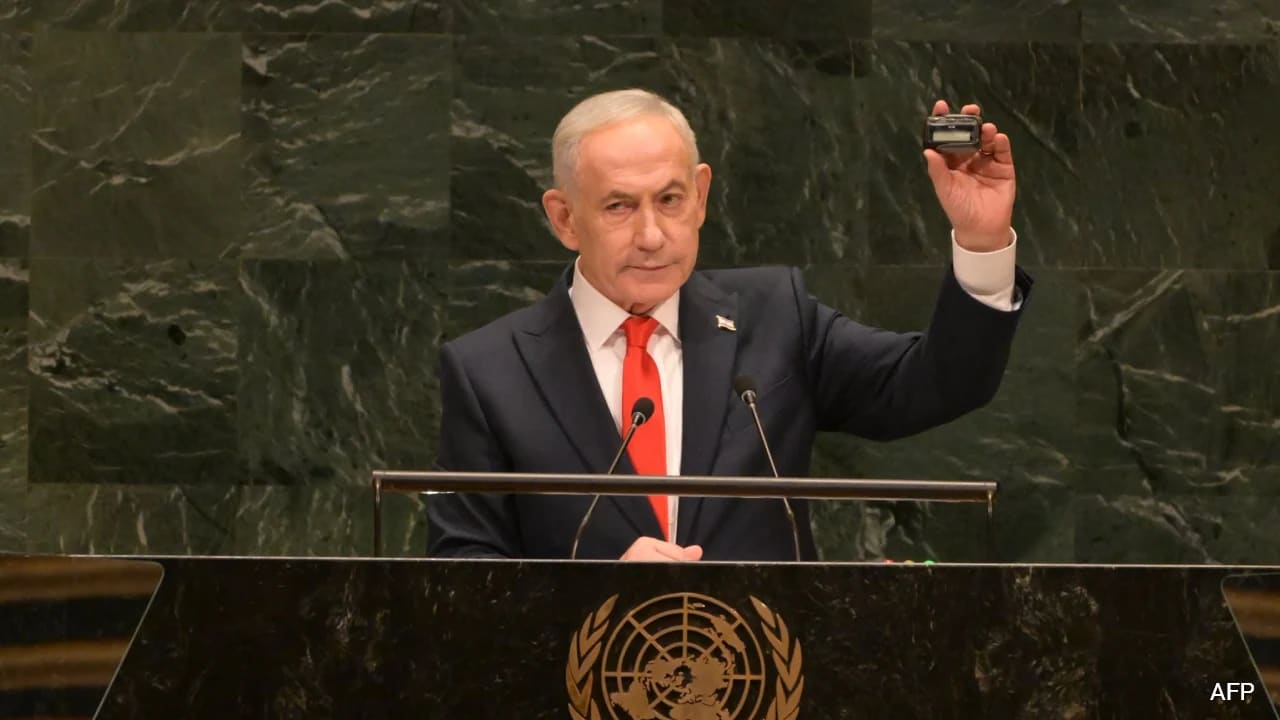
When a world leader pulls a communication device out of their pocket at the United Nations, you know things have gone off script. Israeli Prime Minister Benjamin Netanyahu walked up to the podium at the United Nations General Assembly and held up a pager. It wasn't a random prop. It was a direct callback to the infamous September 2024 operation where rigged beepers exploded across Lebanon, targeting Hezbollah operatives.
He expected cheers. He got a mass walkout and loud jeers instead.
If you watched the broadcast, the contrast was sharp. Netanyahu leaned into his role as a wartime leader fighting on multiple fronts. Yet, the room told a different story. Dozens of diplomats stood up, turned their backs, and walked out of the hall. The chamber was already sparsely populated, making the exodus even more glaring. Instead of dominating the global narrative with a display of tech-sabotage dominance, the speech turned into an optics disaster.
The Pager Prop That Stunned the General Assembly
"You remember the beepers? Well, I can tell you this, Hezbollah certainly remembers them," Netanyahu said from the podium, holding up the device for the cameras.
The reference harks back to one of the most sophisticated espionage and sabotage attacks in modern history. Intelligence operatives intercepted pagers and walkie-talkies ordered by Hezbollah, packing them with small amounts of explosives before delivery. When detonated remotely, the blasts killed and maimed fighters alongside civilian bystanders, rewriting the rules of hybrid warfare.
Bringing a physical reminder of that operation to Turtle Bay was a calculated gamble. Netanyahu wanted to project raw power. He wanted to remind international critics that Israel's military apparatus acts without hesitation. But the stunt crossed a line for many delegates in the hall. To his supporters back home, it looked tough. To the global community watching, it felt like an escalation theater that ignored mounting civilian costs and international law.
Fighting on Seven Fronts and a Shifting Global Stage
Netanyahu used the address to defend Israel's military campaigns. He insisted that the country has spent years fighting a grueling war on seven fronts. He asked the room if any other nation of comparable size could withstand that kind of pressure.
He didn't stop at Hezbollah. The speech expanded into a broad diplomatic offensive. He targeted Iran, calling its government a murderous regime and celebrating military efforts that have targeted Tehran's atomic program. He took direct aim at Turkey, labeling its leadership with harsh rhetoric over regional disputes. Even local politics caught stray shots, with Netanyahu criticizing Western leaders and figures like New York's administration over safety concerns for Jewish communities.
Britain and France weren't spared either. Netanyahu accused both nations of hypocrisy, calling out their past colonial histories while they lecture tiny states on modern geopolitics.
Why the Room Emptied Out
Diplomacy at the UN relies heavily on decorum, even when nations despise each other. Gross violations of that unwritten code usually result in cold shoulders, but actual walkouts on this scale point to deep, hardening fractures.
Dozens of countries participated in the walkout. Envoys from Arab nations, Latin American countries, and non-aligned states cleared their rows as soon as the rhetoric escalated. When Netanyahu shouted down the remaining audience members—calling them moral cowards if they didn't leave—the atmosphere devolved completely.
The speech proved that international fatigue with the ongoing Middle East conflict has reached a boiling point. Western allies are growing impatient, regional adversaries are digging in their heels, and global forums are turning into shouting matches rather than venues for peace.
Netanyahu flew back to Israel immediately after the speech, diving right back into a domestic election cycle where political survival dictates every public move. Holding up a pager at the UN might have played well to hardline voters at home. On the world stage, it only cemented how isolated Israel's current strategy has become.