Elections roll around, and certain politicians immediately pull a familiar playbook off the shelf. You've seen it happen before. Sen. Ted Cruz takes the stage at a Republican convention in Dallas and fires up the crowd by declaring that Sharia law has no place in America. Texas Gov. Greg Abbott chimes in, promising to ban it entirely.
It sounds tough. It generates instant applause. But honestly, it's a political prop designed to panic voters.
Behind the podium speeches and the formation of groups like Congress’s "Sharia-Free America Caucus"—which now boasts over sixty Republican members—lies a stark reality. None of these proposed anti-Sharia bills actually pass. They aren't written to become functional laws. They're written to capture headlines, rile up base voters, and use Muslim Americans as a convenient political scapegoat.
Muslim Americans aren't staying quiet about it anymore. Across the country, community leaders, scholars, and everyday citizens are pushing back. They're tired of seeing their faith's core religious code twisted into a fictional plot to overthrow the U.S. Constitution.
What Sharia Actually Means vs. What Politicians Claim
If you listen to campaign ads, you might think Sharia is a foreign legal code meant to replace American courts. That's entirely false.
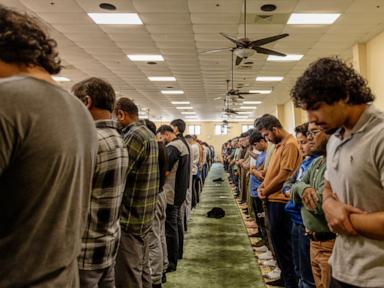
Linguistically, the Arabic word translates to a path to water or a path to guidance. For ordinary Muslims living in the United States, Sharia is an internal spiritual guide. It shapes personal ethics, charity, fasting during Ramadan, daily prayer, and family conduct. It has zero to do with replacing civil law.
Think of it this way. Millions of people look to religious frameworks to guide their personal morals, whether it's Jewish law derived from the Torah, Christian principles from the Ten Commandments, or Islamic ethics. None of these personal frameworks threaten constitutional rights.
Asma Uddin, a law professor at Michigan State University, has pointed out that politicians intentionally weaponize ordinary religious practices. They look at things like mosque attendance, modest dress, or personal family counseling and try to frame them as hidden political threats. It's a calculated strategy.
The Political Playbook in Texas and Beyond
Texas has become Ground Zero for this specific brand of political theater. Beyond fiery rhetoric from federal lawmakers like Rep. Chip Roy and Rep. Keith Self, state actions have directly targeted Islamic institutions. Texas Attorney General Ken Paxton recently demanded documents from a Dallas-based Islamic Tribunal, questioning whether it operated as an illegal foreign court.
In response, the tribunal clarified its mission publicly, emphasizing that its arbitration services always complement American legal systems and never replace them.
Civil rights groups see right through the strategy. The Council on American-Islamic Relations has designated the Sharia-Free America Caucus as an anti-Muslim hate group. Corey Saylor, a senior researcher at CAIR, pointed out the historical parallels. He noted that the bigoted rhetoric targeting Muslims today closely mirrors the anti-Catholic vitriol once thrown at Irish and Italian immigrants generations ago.
How Muslim Communities Are Responding
Instead of retreating, Muslim American leaders are leaning heavily into education. Outreach directors like Sabeel Ahmed, who leads the Illinois-based group GainPeace, spend their time traveling to states like Texas. They host mosque open houses, lead community workshops, and talk directly with local residents.
The goal is simple: demystify a misunderstood term. When people actually meet their Muslim neighbors and learn what the faith teaches about justice, mercy, and responsibility, the political fearmongering loses its power.
Abdullahi Ahmed An-Na'im, an Islamic scholar and former Emory University law professor, has called the current political attacks a total dehumanization of minority groups. He notes that Muslim Americans embrace their faith willingly while simultaneously holding deep loyalty to American constitutional values. You can be a devout Muslim and a proud American at the same time. The two are not mutually exclusive.
Cutting Through the Noise
If you want to understand these political talking points, you have to look at the timing. Anti-Sharia campaigns always surge right before major elections. They rely on voters not knowing the actual definition of the words being thrown around.
When you hear politicians warning about foreign legal takeovers, check the facts. Look at who is sponsoring the bills, what groups are funding their campaigns, and what tangible problems they are ignoring while they focus on manufactured culture wars.
Don't let election-year panic substitute for reality. Educate yourself on what your neighbors actually believe, support community leaders who bridge divides, and refuse to fall for recycled political fear tactics.