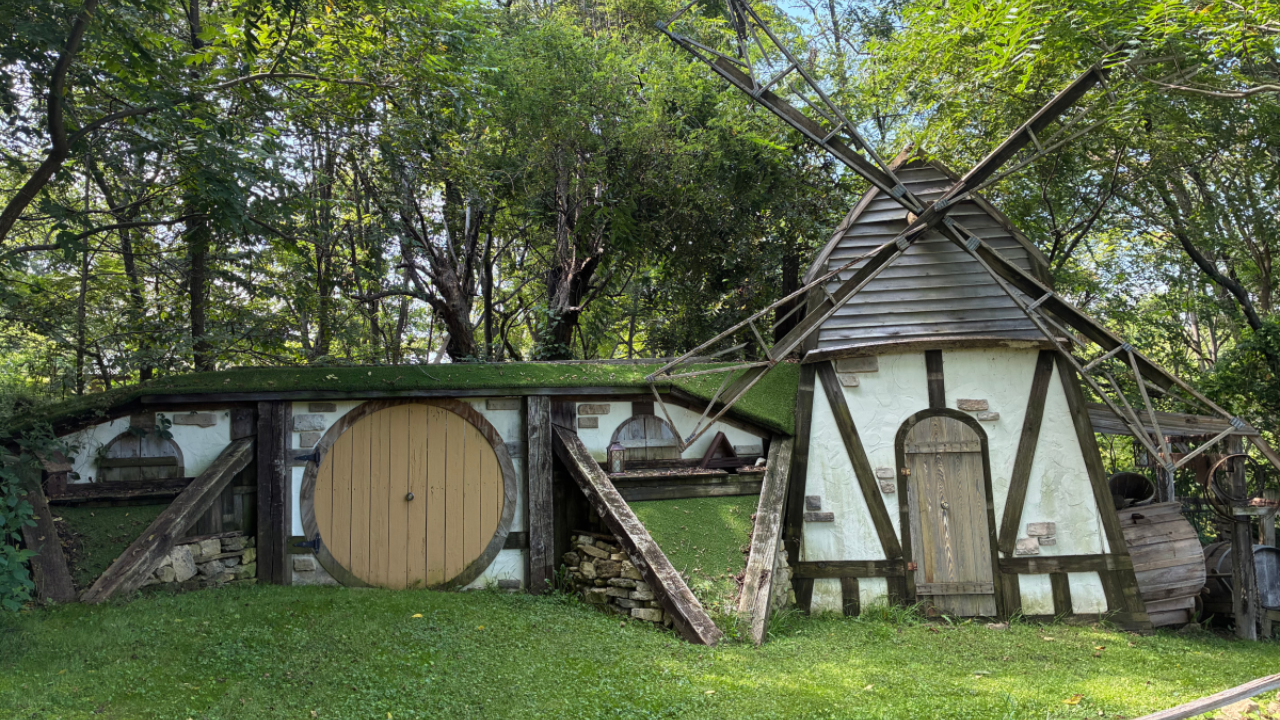
Most DIY projects end up as half-finished deck extensions or messy garage workshops that everyone tries to ignore. Rick Sparks took a different route. What started back in 2018 as a plan for a single weekend getaway cabin outside Connersville, Indiana, mutated into Rackshire—an sprawling 11-building fantasy village built mostly from secondhand lumber and discarded materials.
If you think this is just a quirky backyard hobby, you're missing the point. Sparks bought his 3.5-acre property for about $17,000, rolled up his sleeves, and spent seven years welding, carving, and stacking stone to build a functional slice of Middle-earth. Now, instead of a quiet escape, he runs an annual festival that draws thousands of visitors from across state lines.
The Reality of Building a Fantasy Village From Scratch
Sparks didn't stumble into this blind. Working as a live-in caregiver for people with disabilities gives him an alternating week-off schedule, which handed him blocks of uninterrupted time for construction. Add in his past experience as a builder and landscaping company owner, and you have the exact mix of practical tradesmanship and creative stubbornness needed to pull it off.
Building underground-style round doors and turf-covered roofs isn't like framing a standard suburban drywall box. You have to solve weird structural problems. How do you waterproof a curved roof? Where do you source authentic-looking stone fireplaces without breaking a modest budget? Sparks solved these by haunting salvage yards, buying second-hand lumber, and leaning on decades of hands-on construction instincts.
His children grew up on Tolkien books, animated adaptations, and tabletop roleplaying games like Dungeons & Dragons. His daughter, Kyla Robinson, remembers him constantly crafting custom props long before internet tutorials made DIY culture mainstream. When she joked about living in a Hobbit house while house-hunting years ago, Sparks drew up the initial blueprints. She eventually bought a conventional house instead, but her dad refused to drop the idea.
Why People Drive Hours to See Rackshire
The first round house was supposed to be the end of it. Then the local curiosity seekers arrived.
Strangers started pulling over on State Road 44 just to snap photos. Traffic got so chaotic that Sparks had to install a semicircular driveway so visitors could get back onto the highway safely. He gets drop-in sightseers almost daily now. Fans like Monica Osting drove ninety minutes from Ohio just to see the structures in person after spotting them in online Middle-earth groups. Osting eventually volunteered to build Rackshire's official website just to help manage the influx of attention.
What started as word-of-mouth curiosity exploded into an organized event. The site's annual festival, timed to coincide with Tolkien Week and Hobbit Day around September 22, drew over 3,000 attendees across three days. Visitors wait up to ninety minutes just to peek inside the main dwelling.
Organizers now use handheld clickers to track crowd capacity, coordinate off-site parking at neighboring farms, and recruit specialized vendors selling armor, leatherwork, pottery, and blacksmithing goods.
What’s Next for Indiana’s Real-World Middle-earth
Sparks isn't coasting on his initial success. He's currently plotting an expansion that will push the village toward fifteen or twenty total structures, transforming the acreage into a permanent medieval-style town setup.
The master plan includes:
- A central courtyard anchored by a 24-foot bell tower.
- Dedicated overnight guest accommodations and gaming spaces tailored for Dungeons & Dragons groups.
- A functional gaming store and a fantasy-themed miniature golf course complete with tiny waterways and hand-built bridges.
Converting day-trippers into overnight guests requires jumping through regulatory and zoning hoops that casual builders rarely talk about. Scaling a backyard passion project into a commercial or semi-public attraction brings headaches with local ordinances, parking mandates, and waste management. Sparks takes it in stride, treating the expansion like any other long-term build.
If you want to build something extraordinary on your own land, stop waiting for permission or a massive budget. Start with a single structure, use what's already available around you, and stop worrying if people think your ideas are bizarre.