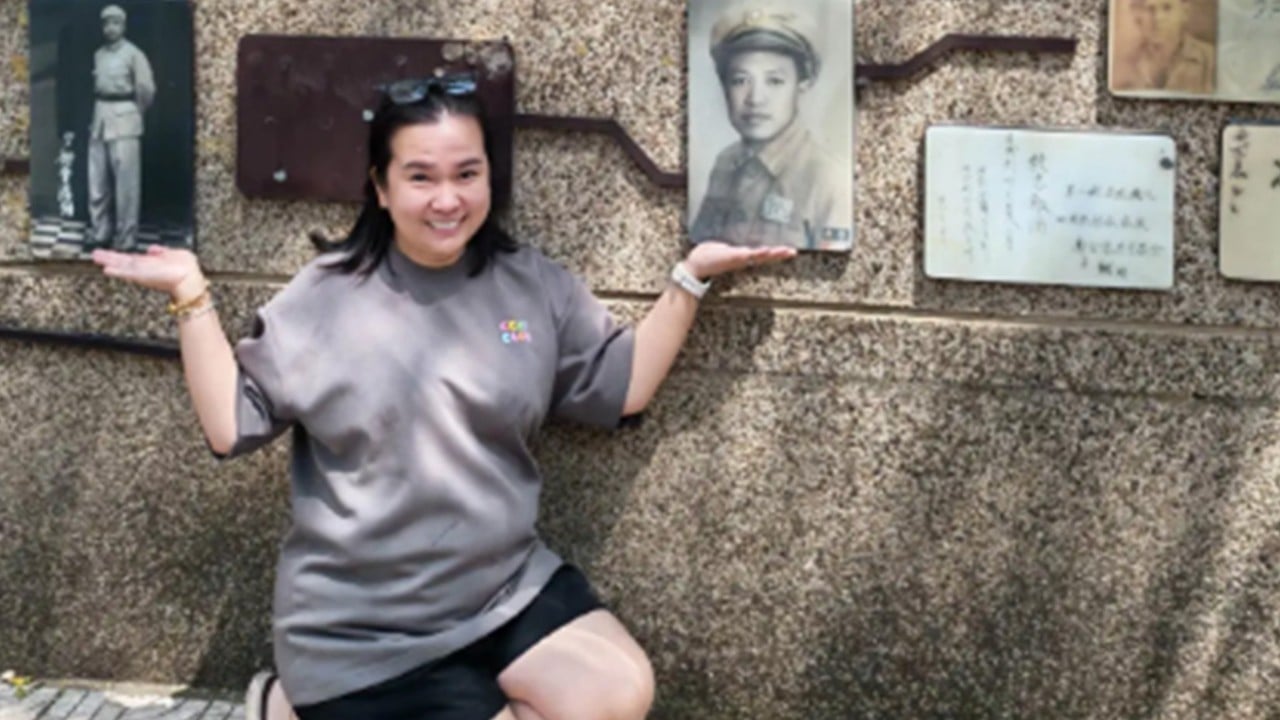
Strolling down a busy street in Kunming while holding a cup of coffee doesn't sound like the place you would stumble into a family ghost. Yet that is precisely what happened to Zhang Huiqing.
She wasn't searching through dusty archives or tracking down obscure government records. She simply looked across Xinwen South Road in southwestern China and spotted a familiar face staring back at her from a public history wall. It was her late grandfather, Kuang Jinyuan, immortalized among thousands of unsung heroes of the Second World War.
For decades, Kuang's family in Malaysia knew almost nothing about what he endured during the war. He kept his experiences locked away in quiet silence, leaving behind a locked trunk of relics that his descendants only opened a decade ago. Discovering his photo halfway across the world on a random street display shows how personal history often hides in plain sight, waiting for the right moment to surface.
The Secret Journey from Alor Setar to the Front Lines
Kuang was born in 1914 in Alor Setar, northern Malaysia. When the Sino-Japanese War broke out in the late 1930s, China's coastal ports fell under Japanese occupation, cutting off vital supply lines. The construction of the hazardous Yunnan-Myanmar highway in 1938 created a single lifeline for transporting war materials, but the route required skilled drivers and mechanics who simply didn't exist in large enough numbers locally.
In February 1939, the Overseas Chinese Relief Fund put out an urgent call across Southeast Asia. They needed young, mechanically minded volunteers to travel to China and keep the supply trucks running.
Kuang answered that call at age 25. He left Malaysia without telling his mother the full extent of the danger he was walking into.
According to his surviving diaries and work certificates, his daily routine was a masterclass in survival. He spent his days repairing battered trucks, hauling vehicles back up from the base of sheer cliffs, and salvaging military supplies scattered across dangerous mountain passes.
Surviving an Eighteen-Hour Siege
The work wasn't just grueling; it was lethal. Out of the 3,200 overseas Chinese mechanics and drivers who volunteered to support the resistance, over a thousand lost their lives.
Kuang's personal records detail a terrifying close call in 1942. He survived an 18-hour siege by enemy forces, broke out of the encirclement, and trekked on foot for 24 grueling days to reach Baoshan in Yunnan. He lost two close comrades along the way.
Despite the trauma of those years, he returned to Malaysia in 1946 and lived a quiet life until his death in 1993 at age 76. He never boasted about his service. His own children and grandchildren grew up completely unaware that his youth had been spent dodging enemy fire on mountain roads.
How Historical Volunteers Unearthed the Past
Families like Kuang's often miss the full scope of their ancestors' sacrifices because the veterans themselves refused to talk about the horrors they witnessed. The truth only came to light ten years ago when historical volunteers tracked down the family in Malaysia.
They opened an old trunk and pulled out Kuang's forgotten documents, photographs, and diaries. That discovery laid the groundwork for his inclusion on the Nanyang Volunteers History and Culture Wall in Kunming, where Zhang eventually found him by pure chance.
Stories like this resonate deeply because they bridge the gap between grand historical macro-narratives and ordinary human lives. Millions of internet users in China responded to Zhang's viral video with messages of gratitude, welcoming her back to her ancestral roots in Taishan, Guangdong province.
History isn't just printed in textbooks. Sometimes it's waiting on a street corner, captured in black and white, asking you to remember what your family chose to carry in silence.


